

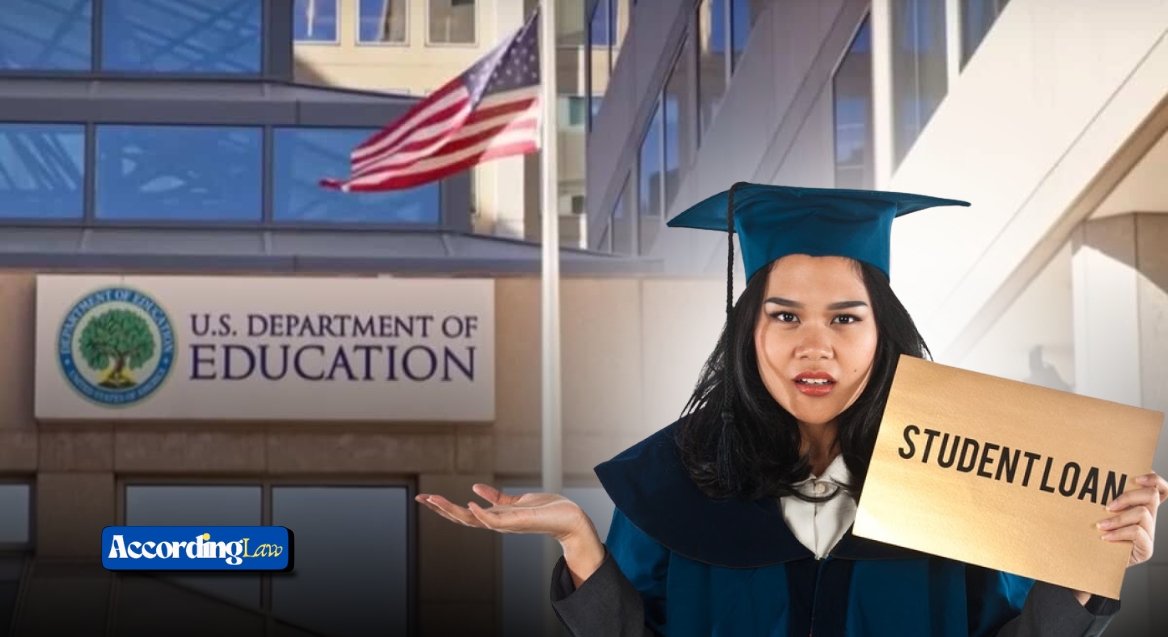
Adriana Walsh, a borrower from New York has brought forth a purported class action Walsh v. United States Department of Education, No. 1:26-cv-0138 which was filed on February 18, 2026. The action was brought in the U.S. District Court for the Southern District of New York where the complainant alleges that the Department of Education advised her previous loan servicer to suppress her loan account.
Consequently, instead of calculating a zero balance after moving the loan to the new servicer, Walsh’s credit report maintained the falsely inflated student loan principal of about $300,000 while her actual debt was in the neighborhood of $150,000.
The case still has a long way to go. The lawsuit is in its inception stage of proceedings and thus still lacks class certification of the court. The defendants of the class action comprise DOE, Equifax, Experian, TransUnion, Nelnet as well as MOHELA.
Have you ever spent hours staring at your credit report and doubting your ability to read? This is precisely what this lawsuit is all about.
Adriana Walsh Student Loan Lawsuit explores credit reporting errors, loan transfer issues, and what borrowers need to know right now. Let us tell the story in a couple of plain words.
Table of Contents
Adriana Walsh: Background, Career, And Role In The Student Loan Lawsuit
Adriana Walsh is neither a star nor an authority and is but a borrower of federal student loans from New York whose name has surfaced in court filings. She is named as a plaintiff in the case and is representing numerous other borrowers caught up in the same situation as hers.
In a way, one needs to take the first step by raising their hand and protesting, and Walsh fulfilled that role.
Breaking Down The Claims In The Adriana Walsh Student Loan Lawsuit
The example of the current case resembles the case when a person is charged for the same item two times, with the person having contacted the seller many times, but everything remaining the same.
The Legal Turning Point That Made This Lawsuit Possible
Here is a detail that is often missed but is of great importance:
Federal agencies used to take advantage of sovereign immunity in order to avoid lawsuits like the present one entirely. However, with the 2024 decision of the U.S. Supreme Court in Department of Agriculture v. Kirtz, the situation has changed.
In that case, the Supreme Court stated that federal agencies could not enjoy the same protection from Fair Credit Reporting Act claims as they do from other lawsuits. Thus, it became possible for Walsh’s attorneys to bring a lawsuit against the Department of Education just like they would against a commercial bank or a credit reporting agency.
The lawsuit rests on two federal laws:
Complete Timeline of the Adriana Walsh Lawsuit
| Date | Event |
| Late 2023 | A large scale Nelnet to MOHELA transfer reportedly generates roughly 1.4 million duplicate account records |
| Late 2023 2026 | The DOE reportedly receives around 500 formal complaints about the suppression practice |
| February 18, 2026 | Adriana Walsh files the class action complaint in the U.S. District Court for the Southern District of New York |
| 2026 (ongoing) | The case proceeds through discovery; no class has been certified yet |
Noteworthy is that there was an earlier filing which reappeared in the D.C. federal court in the month of January 2026 before Walsh decided to dismiss it, and the proceedings continued further in the Southern District of New York under Case No. 1:2 cv
01358. Such procedural changes are not uncommon when it comes to federal litigation and it does not necessarily question the legitimacy of particular charges as much as simply making sure that the correct court has been chosen for carrying out the proceedings.
Where the Adriana Walsh Lawsuit Stands Today
There are no rulings, settlements, or dismissals as of now which confirms the fact that the case is still in its infancy. The case is undergoing the discovery process and has not yet achieved class certification. Hence, it is still early to comment on the fact that the client will get any settlements/compensations or not.
On the other hand, if people want an exciting conclusion of the case, the above mentioned note can appear not that exciting when read.
What This Lawsuit Means for Student Loan Borrowers
Though nothing is confirmed definitively, it could be in your interest to pay attention to such issues if you have had your loans transferred recently from Nelnet to MOHELA, or switched between other federal loan servicers.
You can take the following actions:
Frequently Asked Questions
Q. Is the lawsuit filed by Adriana Walsh against the student loan company genuine?
Certainly, it is a valid federal case aptly referred to as the case of Walsh v. U.S. Department of Education.
Q. What are the charges of the Adriana Walsh case?
It has been alleged that the Department of Education has led to the reporting of doubled student loan balances after transferring from one servicer to another due to its method of not clearing the previous accounts completely.
Q. Who is involved in the student loan case with Adriana Walsh?
The plaintiff in the lawsuit is Adriana Walsh while the defendants are the Departments of Education along with Equifax, Experian, TransUnion, Nelnet, and MOHELA.
Q. Has the court made the final verdict on Adriana Walsh lawsuit?
No, it has not yet made a final judgement. The process is currently going on and no class action has been certified till now.
Q. Can this case impact other borrowers in terms of being affected by similar issues?
It may indeed happen if a class does get certified in the event of the lawsuit being successful.
Final Thoughts
The lawsuit involving Adriana Walsh draws attention to a key issue that affects a lot of borrowers:
The accuracy of student loan reporting upon servicing transfers. The case does not deal with student loan forgiveness or cancellation; rather, it deals with allegations of reporting errors that led to wrong information showing on the borrower’s credit report.
Student loan transfer from one servicer to another is the norm in the federal student loan system. In a typical transfer, the previous servicer ceases to maintain its records while the new one assumes responsibility for the account. Yet when this update is not reported, borrowers may find themselves confused about their accounts and its balance.
The Adriana Walsh case shows how serious small administrative mistakes can be. Inaccurate reporting can make it challenging for borrowers to get a mortgage, a personal loan, a credit card, etc. If the borrower is dealing with huge student loans, another burden is the last thing he needs.