

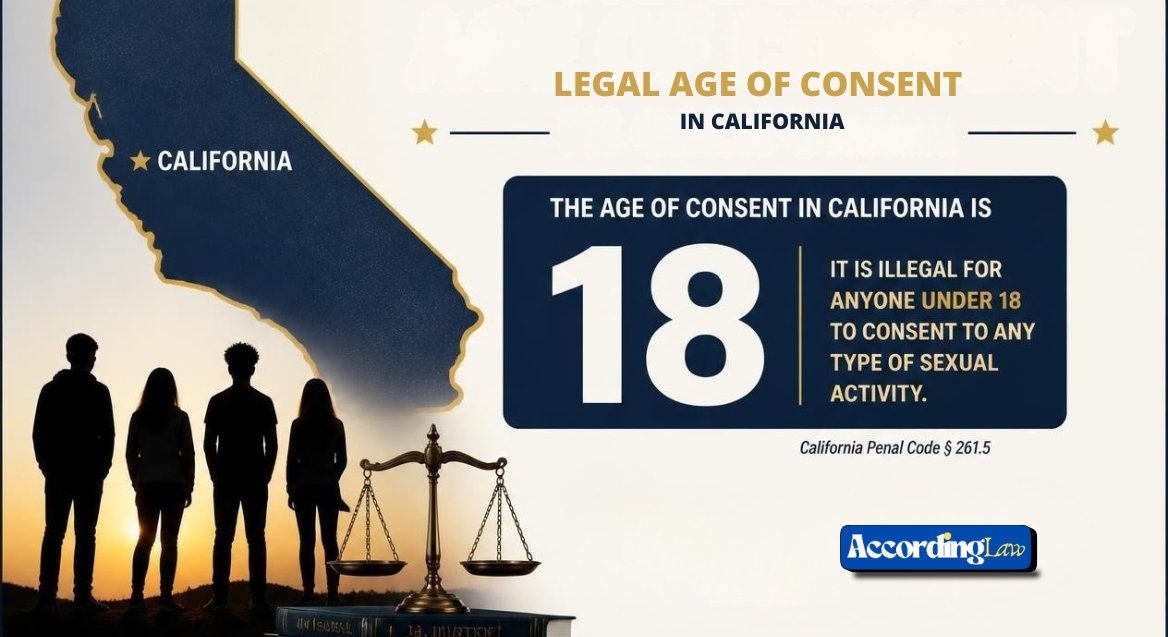
According to California law, the minimum age of consent is 18. The statute California Penal Code Section 261.5 recognizes anyone under the age of 18 years as a minor for the purposes of 8198431 sexual consent, and that does not depend on how mature the minor might be, what the minor might say, or what the adult thinks.
If you are reading this because you typed in your query on the Internet at 11 p.m. out of sheer anxiety, you are doing the right thing. Here you will get to know the provisions of the law itself, where the grey areas in the legislation are precisely set which actually proves to be not that many and how the situation works in life.
There are many inquiries from people who are puzzled about where the lines are set, as a kind-hearted relative told them about the Romeo and Juliet law, which obviously does not exist in that form. This is a mistake that happens more often than you think hence the existence of this guide to make everything clear.
Table of Contents
California Age of Consent Laws: What You Need to Know
Penal Code 261.5 is the legislation that applies in this situation. It prohibits sexual intercourse with anybody younger than 18 years of age, except if the parties in question are married. This crime is popularly known as “statutory rape” while the legislation uses the term unlawful sexual intercourse.
Consent from the Minor Is Not Important
This is the part of the law that confuses most people. The law doesn’t care whether the 16 year old enjoyed himself or consented to the intercourse.
The law cares only about one thing:
whether the state has made the decision on the age at which a person is able to provide informed consent and that age is 18.
Emotional maturity of the participants in the sexual intercourse, duration of their relations, or even feelings have no effect on the legal assessment in case the participant in the sexual intercourse is under 18. California state follows the principle of strict liability in this situation.
California Age of Consent Rules by Age Difference
The real nuance in this law isn’t whether the act was illegal it’s how the charge gets filed. California scales the severity of the charge based on the age gap between the two people involved:
| Age Gap | Charge Level | Potential Penalty |
| 3 years or less | Misdemeanor | Up to 1 year in county jail |
| More than 3 years | “Wobbler” (misdemeanor or felony) | 16 months, 2 years, or 3 years in state prison |
| Adult 21+, minor under 16 | Felony (almost always) | 2, 3, or 4 years in state prison |
Bottom line: the underlying act is illegal regardless of the age gap. But the size of that gap and the minor’s age directly shapes how much legal jeopardy someone faces.
California’s Romeo and Juliet Law: What You Need to Know
What About I Didn’t Know Their Age?
It is a commonly held belief that ignorance about your partner’s being underage absolves you from liability. The argument of reasonable age mistake can be raised in some cases, however, it is subject to conditions and cannot be relied on.
It is an illustration of the importance of detailed information. A discussion with a qualified lawyer is a must.
When Does Age Difference Create Criminal Liability?
California’s age of consent framework takes into account four vital elements to assess whether someone is criminally liable:
Was the person below the age of 18?
The answer is yes, and the activity is illegal, regardless of whether consent was given or not in view of the marriage exception.
What is the age difference?
This will determine whether the act is classified as a felony or a misdemeanor.
Is the person below the age of 16 and the adult 21 years or older?
This falls under the most serious type of felony.
Was there a position of trust?
Individuals in authority or trust such as teachers, coaches, and religious ministers are scrutinized more carefully and may be subject to additional statutes on top of 261.5
Special Rules for Teachers, Guardians, and Authority Figures
Which is why these cases can often be discovered through schools or hospitals rather than a trip to the police station by the survivor.
Penalties for Violating California Age of Consent Laws
the result in one place as this is usually what people would like to know:
Collateral consequences include mandatory sex offender registration in many cases, probation for years and fines amounting to thousands of dollars as well as long lasting implications on employment, housing, and parenting.
The last category, collateral consequences, may actually change a person’s life even if they have served their jail time.
California Age of Consent vs. Federal Law
The federal government has no uniform age of consent. Instead, this is left to every state. Federal law, however, affects other parts of the law, such as child pornography, sex trafficking, and interstate transportation of minors for criminal sexual purposes.
The federal penalties attached to these charges exist alongside charges imposed by California. Two governments may prosecute in parallel under different laws, involving different legal penalties.
Civil Legal Options Available to Survivors
Being charged with a crime is not the only way to go for the victim. According to the California Code of Civil Procedure §340.1, a survivor of childhood sexual abuse is allowed to pursue a civil claim even if years have passed since the incident.
This is very important because many survivors do not come to terms with what happened until they grow up. The law continues to evolve according to the reality that victims of sexual abuse delay their admissions and statements.
Frequently Asked Questions?
Q. Does California have one age of consent?
Yes, Penal Code 261.5 is applicable in full throughout the state.
Q. What happens if both people are under the age of consent?
Technically, both individuals could be brought into juvenile court under state law, based on the limits put forth by prosecutors, the ages of the two individuals, and the details of the relationship.
Q. Is a person liable for crime when he made his choice in a good faith error about the other’s age?
An unreasonable mistake can be sometimes raised as a defense, however, this depends on the situation.
Q. Does getting married offer one the possibility to escape punishment?
The marriage defense is only relevant for the marriage itself and does not erase liability for actions committed prior to getting married.
Final Thoughts
The age of consent in California involves more than knowing a number. The factors to consider under California law include the ages of the parties, the difference in their ages, and the conditions of the relationship.
According to California Penal Code § 261.5, the law defines the rules and consequences of committing sexual intercourse with an individual under 18 years of age.
The laws surrounding age of consent are complicated, and since the consequences of breaching this law may be harsh, parties who find themselves in a specific situation should refrain from relying on general information on the Internet. In unclear cases, it is a good idea to contact a qualified attorney.