
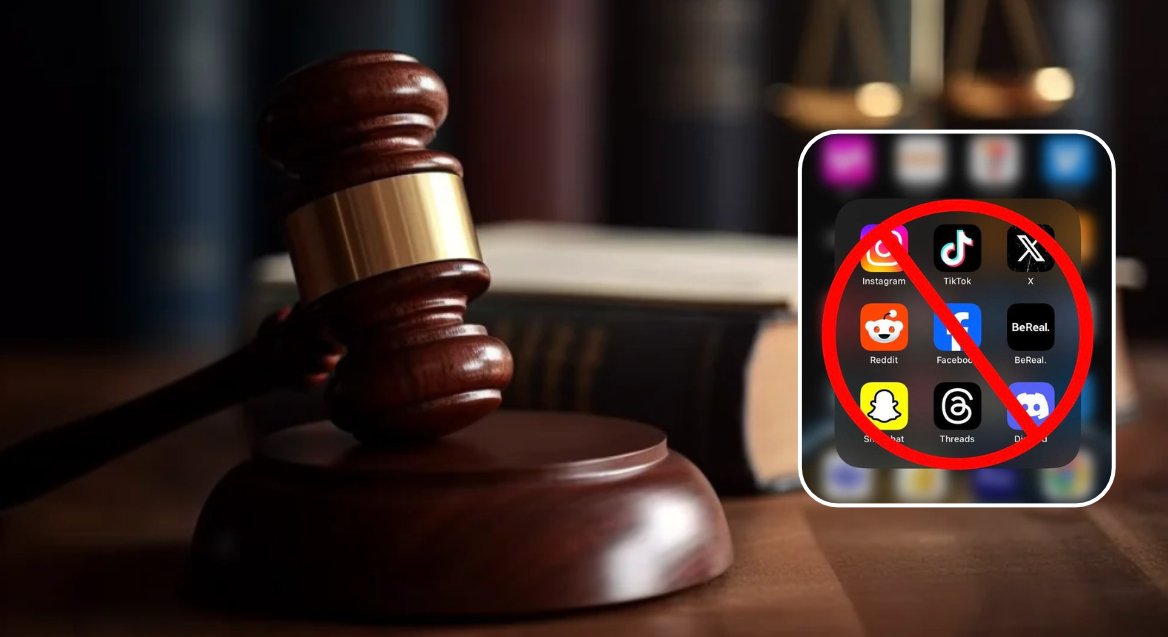
A federal appeals court delivered a major legal victory for child online safety regulations on Wednesday. The US Court of Appeals for the Eleventh Circuit upheld the Florida social media ban for minors. The three-judge panel reversed a lower court’s preliminary injunction that previously blocked the state law. The appellate judges ruled that the legislation is likely constitutional under the First Amendment.
Judge Kevin Newsom wrote the opinion for a unanimous three-judge appellate panel. The decision vacates the earlier block and allows the state to enforce its age restrictions. Supporters of the law aim to curb widespread digital addiction among young teens across the state.
Table of Contents
Why the Court Applied Intermediate Scrutiny
Judge Newsom acknowledged that Florida House Bill 3 (HB3) affects First Amendment rights. Specifically, the law impacts how platforms curate content and communicate directly with their users. However, the panel determined that the Florida social media ban operates in a content-neutral way. The statute does not target specific viewpoints, topics, or particular types of online speech.
Because the law is content-neutral, the court applied intermediate scrutiny instead of strict scrutiny. Strict scrutiny is the highest legal standard and often leads courts to strike down laws. Under intermediate scrutiny, the state must show that the law serves an important government interest.
The panel ruled that HB3 likely passes this constitutional test for two main reasons. First, the state has a vital interest in protecting minors from compulsive social media addiction. Second, the law does not restrict substantially more speech than necessary to achieve that goal.
Key Rules Under Florida House Bill 3
Florida lawmakers passed HB3, and the governor signed the bill into law in May 2024. The Florida social media ban targets platforms that rely on addictive design features. These platforms must prohibit children under age 14 from creating or keeping user accounts. Companies must also get verifiable parental consent before allowing 14- and 15-year-olds to hold accounts.
The Eleventh Circuit noted that lawmakers narrowly tailored the statute to address specific harms. The rules apply only to minors under 16 and only restrict account creation. Minors can still browse public content on these websites without logging into an account.
Furthermore, the law regulates only platforms with high levels of youth engagement. At least 10 percent of a platform’s daily active users under 16 must meet usage thresholds. Specifically, those young users must spend an average of two hours per day on the platform.
The statute also applies only to platforms that deploy specific engagement-driving algorithms and tools. Covered features include infinite scrolling, autoplay videos, push notifications, live streaming, and personal interactive metrics.
Industry Lawsuits and Broader National Trends
Major internet trade groups challenged the Florida social media ban in federal court in 2024. These associations represent leading tech companies and argued that HB3 violated free speech rights.
In March 2025, the US District Court for the Northern District of Florida blocked the law. The Eleventh Circuit later paused that preliminary injunction while it reviewed the state’s appeal. Wednesday’s ruling officially reverses and vacates the district court’s earlier block.
This decision aligns with a growing trend among federal appeals courts across the United States. Several appellate panels have recently overturned lower court blocks on state youth online safety laws. Earlier this year, the Sixth Circuit upheld an Ohio statute that restricts minors’ social media access. Last year, the Ninth Circuit lifted an injunction against most parts of a similar California law.
By contrast, many federal district courts have applied strict scrutiny to similar state regulations. Those lower courts often blocked the laws after finding their restrictions overly broad. The Eleventh Circuit’s latest opinion gives states a clearer legal path to regulate addictive platforms.