
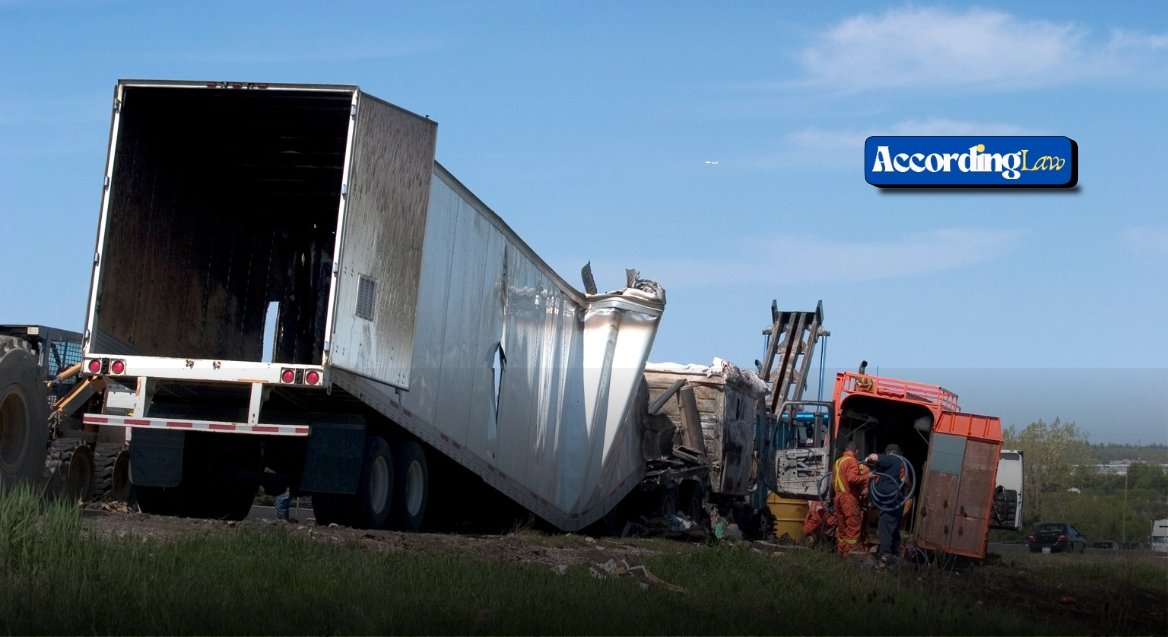
Commercial truck accidents are a different animal entirely compared to collisions between passenger vehicles. The sheer mass of a freight truck, the web of federal regulations governing its operation, and the number of parties who may share responsibility all combine to create a situation that demands careful, informed action.
Whether your immediate concern is your health, your finances, or your legal standing, how you respond in the hours and days following the crash can matter enormously, and knowing when to consult with a truck accident lawyer can protect your interests at every stage of what follows.
Table of Contents
Prioritizing Safety at the Scene
Nothing takes precedence over immediate safety. If you’re able to move, turn on your hazard lights and get yourself to a safe distance from traffic. Call emergency services and give them your precise location.
Keep in mind that commercial trucks sometimes carry hazardous cargo, so keep well away from any spills or leaking fluids until first responders arrive and can assess the situation properly.
Documenting the Scene Responsibly
Once you’re out of harm’s way, start documenting, carefully and objectively. Photograph vehicle damage from multiple angles, capture road and weather conditions, and record the positions of every vehicle involved.
Get contact information from any witnesses who are present. Documentation gathered on the spot, before anything is moved or cleaned up, carries far more weight down the road than anything assembled after the fact.
Seeking Appropriate Medical Care
Even if you walk away from the scene feeling fine, get a medical evaluation without delay. Injuries common in truck accidents, whiplash, spinal trauma, internal bleeding, frequently have delayed symptom onset, sometimes not becoming apparent for hours or days.
A physician’s assessment creates a timestamped medical record that directly ties your injuries to the accident, and that record becomes critical evidence if you eventually pursue a claim.
Understanding the Connection Between Medical Documentation and Legal Protection
Follow through on every recommendation your provider gives you. Gaps in treatment, missed appointments, therapy you stopped attending, can later be used to argue that your injuries weren’t as serious as you claimed. Keep copies of all diagnoses, treatment plans, and receipts for ongoing care. The paper trail you build now is the foundation you’ll rely on later.
Collecting Essential Documentation
Request the official police report and note the report number for your records. Collect insurance information from all parties involved, and write down the commercial truck’s company name, carrier identification number, license plate, and vehicle identification number.
Commercial trucks are subject to Federal Motor Carrier Safety Administration (FMCSA) regulations, which means additional evidence sources, driver logbooks, electronic logging devices, maintenance records, may exist. These materials can disappear quickly, so steps to preserve them should be taken as soon as possible.
Organizing Your Records
Set up a dedicated file, physical, digital, or both, for every document related to the accident. Keep a running, chronological timeline of events and any communications you have with insurers or other parties. Save receipts for every expense the accident has generated. Hold onto originals and never throw anything away, even if it seems minor at the time.
Why Truck Accidents Differ from Standard Vehicle Collisions
In a typical two-car collision, liability usually comes down to one driver or the other. A commercial truck accident is rarely that straightforward. Multiple parties may share responsibility: the driver, the trucking company, whoever loaded the cargo, a maintenance contractor, or even the vehicle’s manufacturer.
FMCSA regulations set baseline safety standards for the industry, and violations of those standards can serve as direct evidence of negligence. Commercial insurance policies also carry substantially higher limits than personal vehicle coverage, which shapes how claims are evaluated, and how aggressively they may be contested.
Communicating with Insurance Companies
Stay factual and measured in all communications with insurance adjusters, including those from your own insurer. Don’t speculate about fault, and think carefully before providing a recorded statement without first understanding your rights.
Early settlement offers from the at-fault party’s insurer often fail to account for long-term medical costs, lost earning capacity, or extended rehabilitation. Don’t accept any settlement until you have a clear picture of the full scope of your injuries.
Recognizing Situations Requiring Legal Expertise
Some circumstances make professional guidance not just helpful but necessary:
Commercial truck accident law draws on specialized knowledge of federal regulations, industry standards, and multi-party liability frameworks, areas where general experience simply doesn’t go far enough. In these situations, professional guidance provides investigation support, a thorough evaluation of damages, and consistent protection of your rights throughout the claims process.
Thinking Beyond Immediate Recovery
The consequences of a serious truck accident rarely end when the acute treatment does. Ongoing rehabilitation, reduced earning capacity, and lasting psychological impact are all real possibilities that deserve careful consideration.
Thorough documentation from the very beginning supports your ability to account for these future costs when the time comes. Avoid posting about the accident on social media, discussing fault with anyone other than your attorney, or accepting a settlement before the full trajectory of your recovery becomes clear.
Taking Control of Your Recovery
Responding effectively to a commercial truck accident comes down to a few core principles: prioritize safety, document everything, seek medical care right away, and take the time to understand the regulatory complexity that sets these crashes apart from ordinary collisions.
When injuries are serious or liability is genuinely in dispute, professional guidance stops being optional. Most importantly, informed action, grounded in accurate records and a solid understanding of your rights, is the strongest foundation you can build your recovery on.