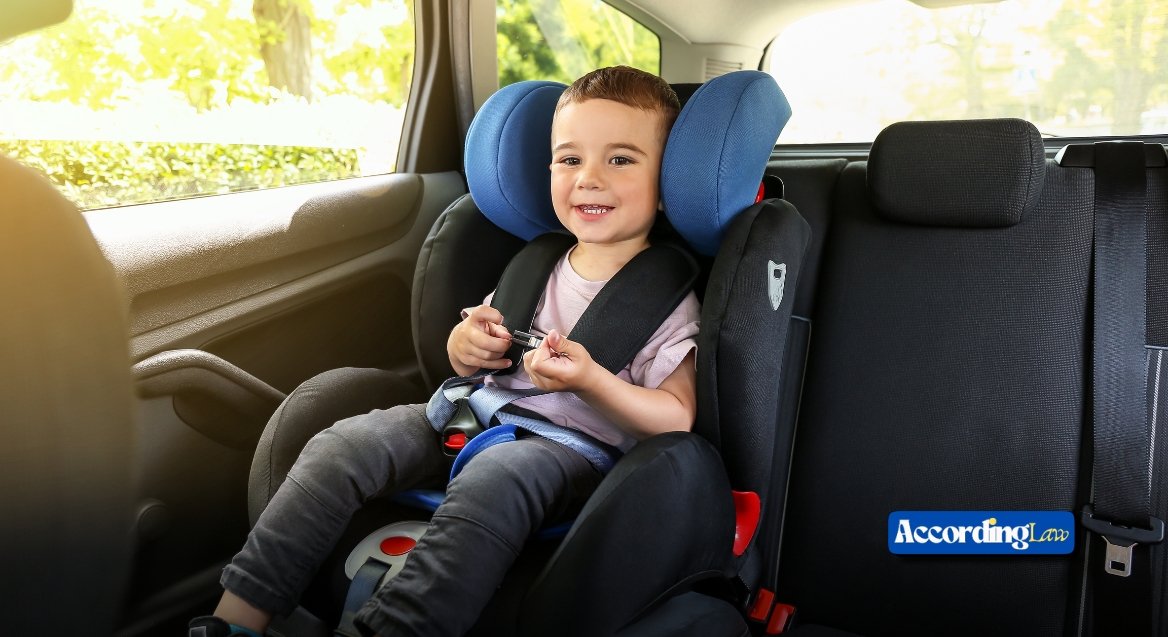
In California, it is required to keep children under the age of two riding in the back seat of a car and in a rear facing car seat until the child weighs 40 pounds or reaches a height of four feet or nine inches whichever one comes first.
Children must follow these stages: rear-facing, forward-facing with a harness, booster, until they reach age eight, or if they are four feet nine inches tall before they turn eight.
I will never forget putting my first child into a rear-facing seat and looking at it suspiciously. Is this car seat even securely installed? I would tug, push, sit yup, that counts as checking if a child’s car seat is installed properly and still could not guarantee it was correctly installed.
If you are sitting there feeling something similar to the feeling I had when I installed my first rear-facing seat, know that you are not alone! Here is a complete stage-by-stage (rear-facing, forward-facing with harness, and booster) installation checklist to help you stop worrying and start driving confidently.
Table of Contents
Challenging the Standard “Follow the Rules” Mindset
The laws on car safety seats in California were created based on science. There is a logic behind using a rear-facing seat for an infant’s head, neck, and spine in an accident as compared to using a forward-facing seat during this period (the first two years). Although it can be overwhelming to remember all of the rules, each of the steps is intended to reduce the likelihood of injury in the event of an automobile accident.
If you understand why these laws were put into place versus simply seeing a list of what is required by law, it is a lot easier to understand the purpose of the laws, as well as the number of seat belt regulations as they are written in California Vehicle Code Section 27360.
Stage 1: Rear-Facing Rules for Infants and Toddlers
New parents ask about this stage the most, and for good reason it’s the longest one, and the one everyone loves to debate at family gatherings.
A lot of people make a mistake on this last point. The floor is being set by the law and the ceiling is being set by the car seats manufacturing company. If the convertible seat allows for rear facing up to 50 pounds legally and correctly then it is safe and legal for you to have your toddler in a rear facing seat until long past they are 2 years old…even though the law says you can legally turn forward to face earlier.
My pediatrician said it best: You should keep your child rear-facing for as long as possible… it is safer this way, and the law is only a minimum requirement, not a goal.
Your child will move to their new, forward-facing car seat with a 5-point harness once they are no longer of the rear-facing limits by height and/or weight, as well as age.
Stage 2: Forward-Facing Rules for Toddlers and Preschoolers
Your child will move to their new, forward-facing car seat with a 5-point harness once they are no longer of the rear-facing limits by height and/or weight, as well as age.
This stage goes quickly. One year your child is small for the seat, and the next year, their knees are almost up to their chin when sitting in the car seat. Make sure to check the car seat manufacturer’s limits every few months for your child, as they may have changed since you last checked.
Stage 3: Booster Seat Rules for School-Aged Kids
The restrictions to using booster seats take into consideration both age and weight, and many parents are making an error by rushing through this stage of child restraint system to the next stage. A child can no longer be restrained in a belt-positioning booster seat when they reach either their 8th birthday or 4 ‘9″, whichever occurs earlier.
Like every other transition to another type of child restraint system, your child should still be secured in a booster seat in the vehicle’s back seat. It’s important to note that a booster seat is not a status symbol for your child that signifies they are “done” using the child restraint system.
A booster seat lifts the child to the proper height to allow the vehicle seat belt to restrain the child as designed; across the hips and collarbone, not across the abdomen and neck.
I know of several family members who have transitioned a child from using a booster seat to using just a vehicle seat belt only because the child was “big for their age, and therefore does not need to be in a booster seat”. This is exactly the situation the new law is trying to prevent.
Car Seat Laws 2026: Upcoming Changes You Need to Know
If you’ve been paying attention to the news lately, you may have heard rumors surrounding the car seat law update for 2026. Now is the time to start preparing for it!! Assembly Bill 435 has made it mandatory that all children aged 8 to 15 undergo a 5-Step Seat belt Fit Test before being allowed to use an adult-sized seat belt beginning on January 1, 2027. Simply turning 8 years old is no longer the only prerequisite a child needs in order to be eligible to use an adult-sized seat belt.
This test will determine:
Should any of these criteria not be fulfilled, your child will still legally have to remain in a booster seat, regardless of age. Smart changes it’s logical. A lot of eight-year-olds do not yet have the physical developments required to use an adult safety belt, and this decision helps fill the gap.
Quick Reference: Age and Weight Table
| Stage | Age Range | Seat Type | Key Requirement |
| Infant | 0–2 years | Rear-facing car seat | Stay rear-facing until 2, or until 40 lbs / 40″ |
| Toddler/Preschool | 2+ years | Forward-facing with 5-point harness | Use until manufacturer’s max height/weight |
| School-age | 4+ years (until 8 or 4’9″) | Booster seat | Seat belt must fit properly (5-step test) |
| Pre-teen/Teen | 8+ years or 4’9″+ | Seat belt (lap and shoulder) | Must pass the 5-step fit test starting 2027 |
When your baby becomes three years old, you will want to refer back to this table to see if either of the two car seats in your garage is still being used under state l
Essential Safety Notes and Legal Exceptions
Penalties and Enforcement
Skipping these rules isn’t just risky, it’s expensive.
Proper Car Seat Installation: What Every Parent Should Know
An alarming statistic:
On the national level, as many as 95% of car seats are incorrectly installed! Wow! I was surprised to learn this and amazed when I discovered that a certified technician found a loose strap in my own supposedly safe car seat installation. You do not need to be an expert to get your car seat inspected. Local Child Passenger Safety technicians offer periodic free inspection events for parents who want their seats checked. All parents should take the time to have their car seats checked by a certified technician for at least once 20 minutes of your time.
Frequently Asked Questions
Q. Can newborns sit in the front seat?
No. Every child under 8 must ride in the back seat in California, and newborns specifically need to ride rear-facing there, away from active airbags.
Q. The earliest a child can be front facing in the state of California is 2 years of age?
However, children may also be front-facing if they weigh 40 pounds or are 40 inches tall. Many pediatricians are in favour of continued use of rear-facing car seats, even if allowable height and weight restrictions have been met.
Q. For Uber & Lyft, a special car seat is not necessarily required?
However, most children will require to have a car seat in these rideshare vehicles as well as in their own vehicles, so many parents will bring their own portable car seats versus depending upon the driver for them.
Q. What happens if my car seat expires?
Car seats carry expiration dates (usually 6–10 years from manufacture) printed on the shell. An expired seat may not meet current safety standards and shouldn’t be used, even if it looks fine.
Q. Booster seats are not automatically required when your child reaches 8 years of age?
You will also want to consider your child’s height before making this decision. In the state of California, children will generally require a booster until they reach either their 8th birthday or 4’9″ tall, whichever comes first. In 2027, children that would not otherwise require a booster seat will also be required to complete the 5-step seat belt fit test.
The purpose of understanding California’s car seat laws isn’t only to stay legal but to help provide safety for children in their most vulnerable years.
Final Thoughts
The purpose of understanding California’s car seat laws isn’t only to stay legal but to help provide safety for children in their most vulnerable years.
Here are the most important things you need to remember: