

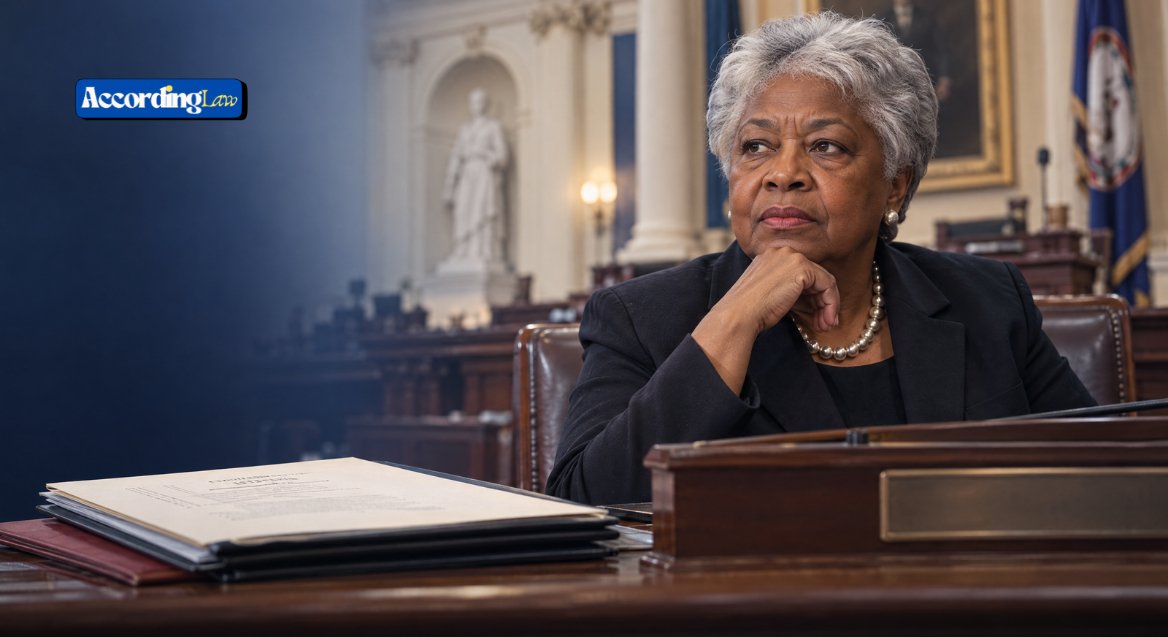
Virginia state Sen. L. Louise Lucas has been indicted in a federal public corruption case that prosecutors say involved marijuana distribution, money laundering and the use of political influence for private financial gain.
The eight-count indictment, unsealed October 22 in the Eastern District of Virginia, names Lucas and six other defendants. Federal prosecutors allege that Lucas led what they call the “Lucas Enterprise,” a network involving relatives and business associates that acquired and distributed marijuana, laundered proceeds and sought to influence Virginia’s emerging cannabis market.
Lucas, 82, surrendered to authorities and appeared in federal court in Norfolk. Court records cited by The Associated Press say she was released on her own recognizance. The charges remain allegations, and Lucas is presumed innocent unless proven guilty in court.
Table of Contents
What the federal indictment alleges
According to the Justice Department, the case includes allegations of racketeering conspiracy, conspiracy to distribute and possess marijuana with intent to distribute, money laundering conspiracy, honest services fraud through bribery, maintaining drug-involved premises, firearms violations and wire fraud.
Prosecutors say the alleged enterprise generated about $4.5 million over roughly five years. They further allege that Lucas used her position as chair of the Virginia Senate Finance and Appropriations Committee to shield the operation from scrutiny and to advance legislation or licensing interests that could benefit the group.
The indictment also connects the allegations to businesses associated with Lucas, including The Cannabis Outlet and The CBD Shoppe in Portsmouth. Federal authorities previously searched Lucas’s legislative office and cannabis-related businesses in May 2026. The Justice Department says investigators recovered marijuana and firearms during the searches.
Virginia permits adult possession of marijuana, but the state’s legal retail market has not yet fully launched. That regulatory transition is a key backdrop to the government’s allegations about licensing, cannabis sales and political influence.
Lucas and allies reject the government’s framing
Lucas has denied that the federal action should be treated as a legitimate judgment against her. In a statement posted to social media, she said the federal government was using its power to intimidate an 82-year-old woman and vowed not to back down.
Her attorneys described the arrest and the Justice Department news conference as unusual and misleading. Democratic leaders in Virginia have likewise emphasized that the allegations must be tested through a full and fair legal process, even as the indictment raises serious questions about public trust and conflicts of interest.
Attorney General Todd Blanche and FBI Director Kash Patel have rejected suggestions that politics drove the case. The Justice Department says the investigation began before the current administration and that the indictment followed evidence presented to a grand jury.
Why the case matters in Virginia
Lucas has represented Portsmouth in the Virginia Senate since 1992 and has served as president pro tempore since 2020. Her role on the Senate finance committee has given her substantial influence over state spending, taxation and budget legislation.
The indictment puts that political power at the center of the government’s theory. Prosecutors allege that Lucas’s public position was used to protect a private cannabis enterprise. Her defense is expected to challenge both the factual allegations and the government’s interpretation of her legislative and business activity.
The next stage will be driven by arraignment, pretrial motions and the government’s obligation to prove every charge beyond a reasonable doubt. Until then, the case is an accusation, not a final finding of criminal wrongdoing.
This report is based on the Justice Department’s October 22, 2026 press release, the federal indictment and corroborating reports from NBC News, The Associated Press and Virginia Mercury. Allegations are attributed to prosecutors, and the defendant is presumed innocent unless proven guilty.