

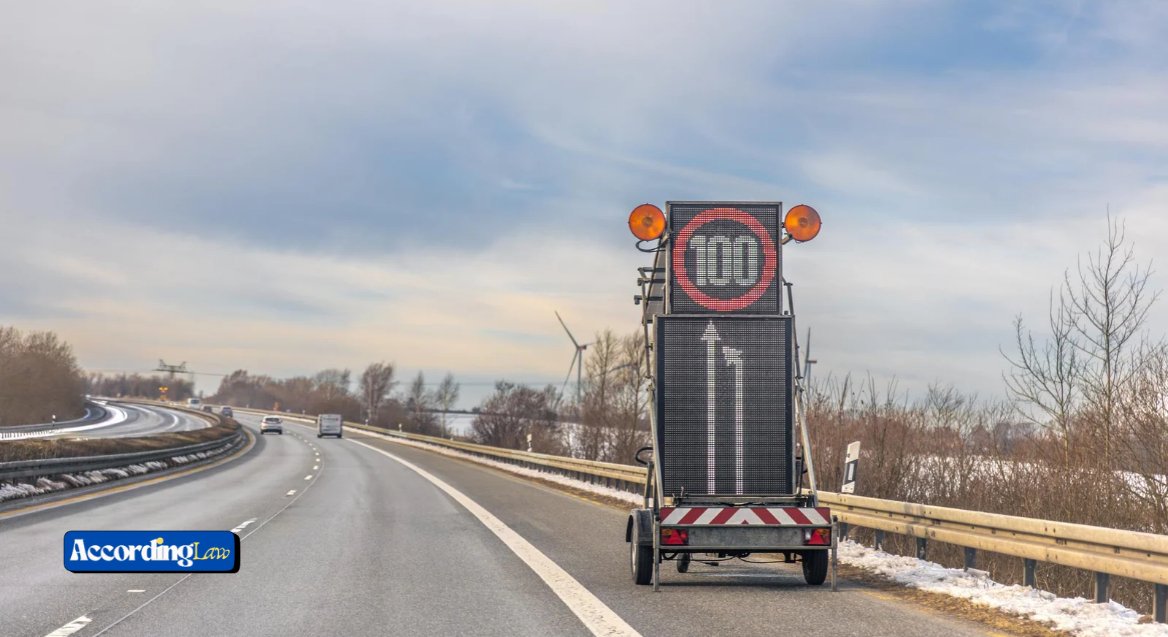
Not every road is built to handle the weight and size of a fully loaded commercial truck. Bridges, mountain passes, and residential streets throughout Idaho and Montana carry specific restrictions on vehicle weight, height, and length, and those restrictions exist for a reason.
When a driver or trucking company ignores them, whether to save time or shave miles off a route, the result can be a structural failure, a jackknife on a grade the truck was never meant to travel, or a devastating collision on a road too narrow for a rig that size. Anyone injured in this kind of crash quickly learns that route violations are not just a regulatory technicality, and speaking with a Truck Accident Lawyer Montana families trust can help clarify how a violation like this affects a claim.
Table of Contents
What Counts as a Restricted Route
Restricted routes are roadways, bridges, and interchanges that carry legal limits on the type of vehicles allowed to use them. These limits are typically posted through signage indicating maximum weight, height, length, or a combination of all three. Some restrictions apply to specific bridges that were engineered decades ago and were never designed for the weight of modern commercial trucks. Others apply to residential neighborhoods, school zones, or mountain roads with grades and curves too severe for large rigs to navigate safely. State transportation departments in both Idaho and Montana maintain designated truck routes precisely so that oversized and overweight vehicles stay on infrastructure built to handle them.
Why Trucking Companies and Drivers Ignore These Limits
Route violations rarely happen by accident, even though that is often the excuse offered afterward. Dispatchers under pressure to meet delivery windows sometimes route drivers along the shortest path without checking whether that path is legally accessible to a truck of that size. Drivers relying on standard GPS navigation, rather than a commercial trucking GPS that accounts for weight and clearance restrictions, may end up on a restricted road without realizing it. In some cases, companies are aware of the restriction and choose to risk it anyway, calculating that the odds of getting caught or causing an incident are lower than the cost of a longer, compliant route. Whatever the reason, the outcome shifts a significant safety risk onto everyone else sharing that road.
The Physical Dangers of an Oversized Truck on the Wrong Road
A truck that exceeds a road’s weight or size limit introduces several distinct hazards. On a bridge rated below the truck’s actual weight, the structure itself can be compromised, creating a danger not just for that trip but for every vehicle that crosses afterward until repairs are made. On narrow mountain roads, an oversized truck may be unable to complete a turn without crossing into oncoming traffic, or without its trailer swinging wide into a lane it was never meant to occupy. On residential streets, the sheer size of the vehicle can make it difficult to see pedestrians, cyclists, or smaller vehicles until it is too late to stop safely. These are not abstract concerns. They are the direct mechanical consequence of putting a vehicle where it does not belong.
How Route Violations Affect Liability After a Crash
When a truck accident happens on a restricted route, that fact becomes a central piece of evidence. A violation of posted weight or size limits can demonstrate that the driver or trucking company operated with a disregard for known safety rules, which strengthens a claim for negligence. It can also point toward broader dispatch or training failures within the company, since a single wrong turn is different from a systemic pattern of routing drivers along roads they should never be using. Investigators typically pull the truck’s GPS logs, dispatch records, and any permits associated with the trip to determine whether the route was authorized or was simply the fastest option chosen without regard for restrictions.
Evidence Used to Prove a Restricted Route Violation
Proving that a truck was operating on a prohibited route involves gathering several types of documentation. Posted signage along the route, weigh station records, and permit databases can confirm whether the vehicle was legally authorized to travel that road. Electronic logging device data and GPS tracking history often reveal the exact path taken and whether it deviated from an approved commercial route. Weight tickets from the truck’s most recent stop can establish whether it exceeded the posted limit for that particular road or bridge. When combined, this evidence builds a clear picture of whether the crash was simply an accident or the predictable result of ignoring a known restriction.
What This Means for an Injury Claim
For someone injured by a truck that had no legal business being on a particular road, this evidence often becomes the foundation of the entire case. It shifts the conversation away from a simple dispute over who had the right of way and toward a broader question of whether the trucking company created a foreseeable hazard by ignoring posted restrictions. Insurance companies are well aware of how damaging this kind of evidence can be, which is why they often respond with aggressive tactics designed to minimize the significance of a route violation. As one detailed look at adjuster behavior from Powell Law Firm explains, understanding how these tactics differ between Idaho and Montana can make a meaningful difference in how a claim is ultimately valued and resolved.