I’ll never forget receiving that phone call. One of my friends (I will use the name ‘Dana’ since this won’t be her real name) called me at eleven during the night, and I could tell from her voice that she was nervous.
She was endlessly questioning that one question: “Is he allowed to do that? Is there something that will be able to stop it?
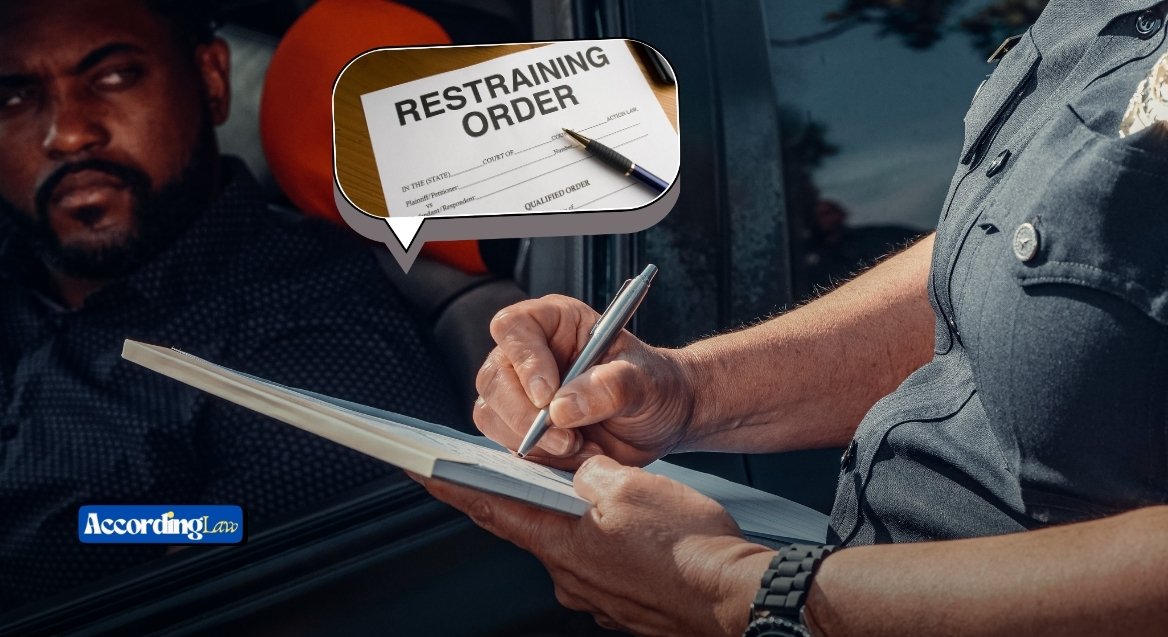
A man had come to the front of her apartment. He hadn’t hurt her or raised his voice. In fact, he didn’t even leave the vehicle but was still right there, at the place he shouldn’t have been.
On that day, me and Dana both learned how quickly a seemingly simple situation can turn into a real confusion of a violation of restraining order. The majority of people think that it’s rather easy to say whether someone has breached something.
If you happen to be in a situation similar to ‘Dana’ or your behavior has been called into question, let me help you handle this problem just the same way I would help Dana if I could on that day.
Table of Contents
Quick Answer:
Here’s the abridged version, as this is likely what attracted your attention:
Violation of a restraining order is a crime in all states of America. It does not necessarily matter if the order is issued by the family court, criminal court, or civil court; once the order is signed by the judge, it gets enforced in all states of America.
If the order is violated, there is a possibility of arrest, charges, and penalties (such as fines), or being jailed.
The consequences of violating the restraining order depend on three factors:
1. The state of occurrence
2. The number of times the restrictions have been violated
3. The kind of violation, whether it was a phone call, a threat, or violence
While sending just one text can be punished quite differently than arriving at someone’s work, it still doesn’t mean one can avoid punishment for a minor violation.
Understanding What Constitutes a Restraining Order Violation
It’s usually at this point where there is quite a bit of confusion, so let’s take things slow.
A restraining order is also known as a protective order or an order of protection, where there are certain restrictions imposed, which include contact prohibition, minimum physical distance, as well as certain regulations regarding firearms, children and property that may be involved.
The moment you violate any of these clauses, you are already breaking the law even if you think that there is no breach of law.
As a result, there are various ways in which one can breach this law, among which may be:
Many people think this way: “But I did not contact her; my cousin did“, but this is not actually accepted by the court as many think it is.
This is another misconception that deserves to be discussed here: that if the person protected by the restraining order makes first contact, the order no longer applies. It does not work that way.
A judge alone has the authority to modify or lift a restraining order. If the protected person reaches out and you reply, you could still be the person charged with violating the order, irrespective of the initial contact made by the other party.
Common Examples of Restraining Order Violations
Real cases tend to involve the same handful of scenarios, over and over:
Some of these feel harmless, even well-intentioned. That’s exactly why they’re dangerous. The law never asks whether your heart was in the right place. It asks whether the order’s terms were broken.
Restraining Order Violation: Penalties and Legal Consequences
So, what actually happens when someone reports a violation? Generally, courts take action on restraining order violations in several different ways, depending on the state and specifics of the violation.
Contempt of court violation
Since a restraining order is a direct order from a judge, failing to comply with it is considered contempt and carries different penalties than those of criminal charges.
Misdemeanor charge
Misdemeanor charges tend to be the most common outcome for a first violation that is nonviolent. Generally, the penalties include fines that can be up to $1,000 in different states and imprisonment ranging from a few days up to six months.
Felony charge
Courts tend to escalate subsequent violations or violations that include threats, weapons, or violence to felony offenses. Felony offenses incur much harsher penalties, including significantly larger fines and sentences of more than a year.
Multiple charges for subsequent violations
Another unexpected piece of information is that every violation is viewed independently. So, if one person violates the restraining order three times in one week, these will all be considered separate charges.
Consequences of breaching a restraining order are not restricted to just the courtroom. The convictions become a part of the criminal history of the person, which can make it difficult to find a job, get a place to live, and get custody of the children.
If a person is in the middle of a custody fight, the violation of the order can be detrimental to their credibility in the eyes of the family court.
The judges often think that the person doesn’t take their orders seriously, which is not a good sign when there is a question about the parenting time of the individual.
Can You Go to Jail for Violating a Restraining Order?
Certainly. Since this question is one most people are hoping to have answered, we will go ahead and give them the answer. Yes, there can be jail time, and it is a very common consequence.
There are two reasons it is more likely than people think.
- One is that police are allowed to arrest without warrants. In most states, police must or are at least permitted to arrest when they have probable cause that a valid order was violated. The officers do not even have to be eyewitnesses; a credible report would suffice.
- The second reason jail is more likely is that, after a restraining order violation, bail conditions become stricter. Since courts take the safety risk of restraining order violations seriously, judges often set the bail amount higher or impose a no-bail condition.
So even when the violation is minor from the point of view of the accused, one phone call or one statement may lead to handcuffs at the time of reporting.
What Are the Defenses to Violating a Restraining Order?
Getting accused doesn’t mean the case is automatically lost. Several recognized defenses to violating a restraining order exist, though which one applies depends entirely on the facts:
None of these defenses come with guarantees, and none of them justify testing an order’s boundaries. But if you’re facing an accusation you believe is unfair or mistaken, raise them with an attorney immediately.
What Happens After a Violation Is Reported?
As soon as there is a report of a violation, everything happens quickly. Normally, the police come and take a statement and, provided the police have enough evidence, they make an arrest straight away.
Then the prosecutors decide if the person has to be charged. If so, the legal process continues with an arraignment, bail hearings, and possibly a trial or a plea negotiation as it happens in other criminal cases.
For a victim of the violation, the report can imply being called for testimony at some later point in time. Thus, it is crucial to have the evidence available the date and time of the events, screenshots, and call logs.
What to Do If Someone Violates a Restraining Order
If you’re the person the order protects, and someone violates it, take these steps:
What to Do If You Are Accused of Violating One
If you happen to be in this position, here’s what to do:
What Steps to Take After a Restraining Order Violation Accusation
If you happen to be in this position, here’s what to do:
When following the order, follow each condition exactly, including the ones that seem unreasonable or inconvenient.
How State Laws Affect Restraining Order Violations
It’s worth reiterating that order protection law is not the same from state to state. An offense considered a felony in one state may only be considered a misdemeanor in another.
Some states have mandatory minimum jail time for someone who violates a restraining order involving a weapon, whereas others leave the judge with the discretion.
The terms differ as well:
A restraining order, protective order, and order of protection are not always interchangeable in different states.
Frequently Asked Questions
Q. What constitutes a violation of a restraining order?
Violation of a restraining order can involve various actions such as contacting the protected individual, seeing him/her, visiting restricted places, or breaching any other restriction appearing in the order.
Q. What are the consequences of violating a restraining order?
A violation can result in being arrested, charged with a crime, fined, imprisoned, or subjected to further court restrictions depending on the laws of the respective state and specifics of the situation.
Q. Is it a crime to violate a restraining order?
Violation of some restraining or protective orders can be regarded as a crime in many states. Crime classification depends on local laws.
Q. Can a text message breach a restraining order?
Yes, any text message, phone call, email, or message in social networks can breach an order that forbids direct or indirect communication.
Q. What defenses can be applied to breach of a restraining order?
The most common defenses include ignorance of the existence of the order, mistake of identity, no intention to commit a breach, or proof that no breach has been made.
Final Thoughts
Breaking a restraining order results in severe legal penalties, regardless of whether the act appears trivial or accidental. Touching the protected individual or stepping into a banned venue are actions that may incur arrest, prosecution, fines, or jail time based on the specific state and situation.
If you are charged with a restraining order violation, you must take the charges seriously and refrain from any other acts that may run contrary to the order. Study the order carefully and consult your attorney to evaluate your case and explore the least painful ways to proceed with your case.