
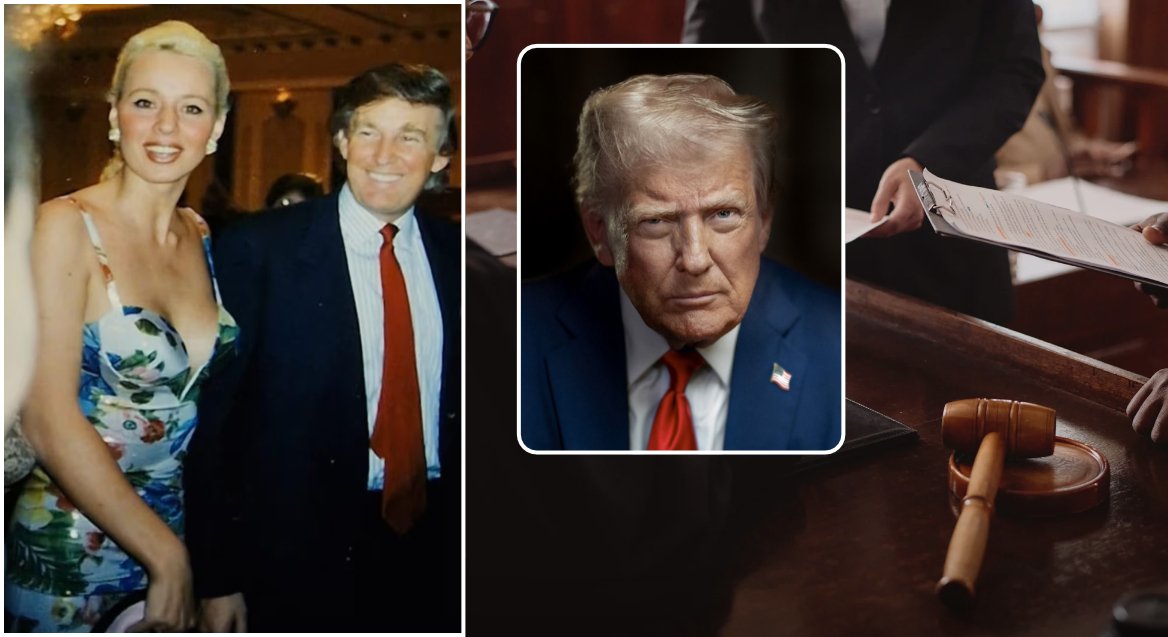
Beatrice Keul, a former Miss Switzerland and model, has alleged that Donald Trump raped her in a suite at New York’s Plaza Hotel during a November 1993 American Dream Pageant event. Her account was detailed in a report released on October 26 by Democratic staff of the U.S. House Judiciary Committee, which is examining Trump’s reported relationship with Jeffrey Epstein.
Keul told committee staff that she was 24 when she met Trump at a press luncheon connected to the pageant. According to the report, Trump offered to help arrange a U.S. visa and admission to New York University through his associate Paolo Zampolli. Keul said Epstein approached her soon afterward and described himself as “Don’s best friend.”
The report says a Trump representative later invited Keul upstairs to meet Trump. Keul alleges that Trump then grabbed her from behind and raped her, tearing her dress and causing bleeding and bruising. She described the alleged assault as “brutal,” according to the committee document.
Keul further told staff that Trump repeated his offers of help after the alleged assault and demanded that she remain silent. She said she completed the pageant in a state of fear, returned to Switzerland, and declined to take part in another Trump-sponsored pageant in Hawaii. She also said Trump called her months later and again offered assistance with a visa and NYU admission.
Table of Contents
What the House report says, and what it does not prove
The House Judiciary Democrats’ document says its account of the alleged rape is based solely on extensive discussions between committee staff and Keul over several weeks. It also refers to other people and records connected to the 1993 pageant, including earlier public allegations by Jill Harth. Those references may be relevant to investigators, but they do not by themselves prove Keul’s allegation.
The committee report is a partisan staff report rather than a court judgment or criminal charging document. TIME reported that it was unable to independently verify the details of Keul’s account. No criminal charge against Trump has been announced in connection with the allegation.
The report places Keul’s account within a broader examination of Trump’s association with Epstein and allegations involving other women. It calls for an independent special counsel to investigate potential co-conspirators and related conduct. Those recommendations are political and investigative requests, not findings of criminal liability.
White House denies the allegation
The White House rejected the allegation. Spokeswoman Lauren Bis told TIME and PEOPLE that the claims were untrue and described the congressional report as a political effort to distract from the administration’s agenda. The White House also said Trump had been “fully exonerated” in connection with Epstein.
Trump has faced other sexual-misconduct allegations, all of which he has denied. Those separate matters should not be treated as proof of Keul’s account. In a different civil case, a New York jury in 2023 found Trump liable for sexually abusing and defaming writer E. Jean Carroll; that verdict concerned Carroll’s claim and was not a ruling on Keul’s allegation.
Why the wording matters in legal news
For publishers, the legally responsible description is that Beatrice Keul alleges or accuses Trump of rape or sexual assault. It would be inaccurate to write that Trump raped Keul as an established fact when the available reporting identifies no criminal charge or adjudication concerning this incident and includes an explicit denial from the White House.
Further reporting should distinguish between Keul’s account, the House committee’s characterization of the evidence, independent verification, and any future response from law-enforcement authorities or the courts.
Editor’s note:
This article reports an allegation. It does not establish that a crime occurred. The account has not been independently verified, Donald Trump has not been charged in connection with it, and the White House denies the allegation.