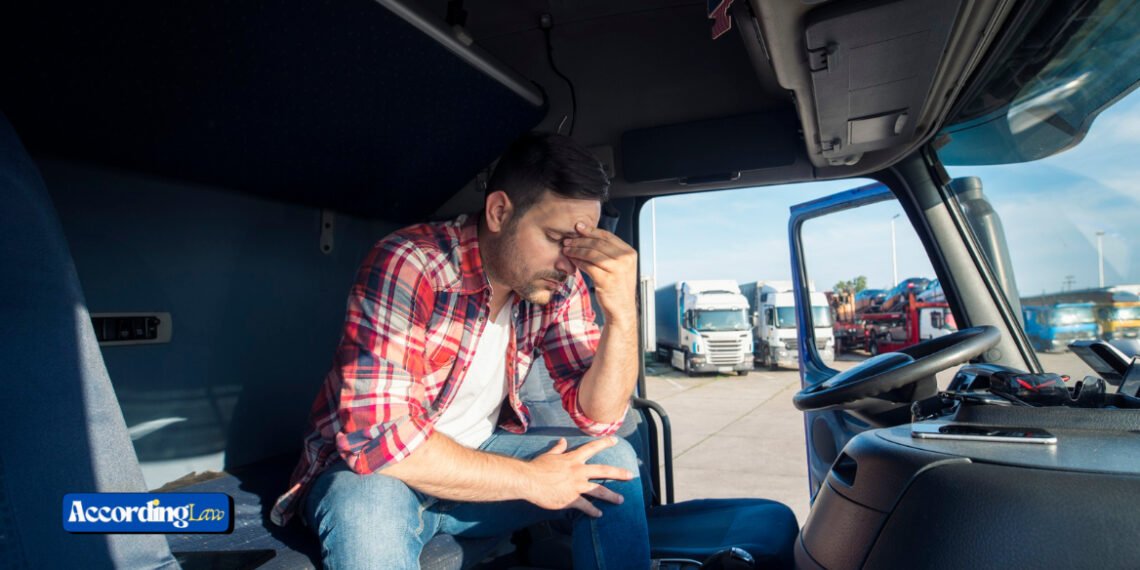
Bakersfield and Kern County sit at the cross section of various freight corridors moving to and from the ports of Southern California, up through the Central Valley, or out east to other states. Highway 99, Highway 58, and the Grapevine all have thousands of heavy trucks passing through daily.
Trucking companies are responsible for operating under a patchwork of federal (FMCSA) and California-specific trucking laws, and victims often don’t realize how many regulations may have been violated in their crash. Understanding the regulations meant to keep drivers safe on the road with commercial trucks can help victims understand the negligence that directly caused the crash and their injuries.
Fortunately, accident victims don’t need to know all the federal and state laws that impact truck accidents, and that’s because a Bakersfield truck accident lawyer, also known as abogado de accidentes de camión en Bakersfield, already knows the laws and which ones might impact a case.
Table of Contents
A Two-Tiered System: Why Federal AND State Rules Both Apply?
Commercial trucking in California operates under two overlapping layers of regulation and understanding both can make the difference when it comes to accounting for every contributing factor in an accident. At the federal level, the Federal Motor Carrier Safety Administration (FMCSA) sets baseline safety standards for any truck crossing state lines. This covers everything from driver hours to vehicle maintenance to drug testing. These rules exist to create consistency for interstate carriers moving freight through California and beyond.
California adds its own layer through CHP’s Motor Carrier Safety Unit and the California Vehicle Code, the state enforces additional requirements that are often more strict than federal rules, like hours-of-service rules and inspections particularly impacting intrastate trucking.
For accident victims, the key question isn’t just “was a trucking rule broken,” but “what trucking rule was broken, and how does it affect the accident claim.” This distinction shows why it’s important to check for regulatory compliance from the very first days after a crash and shapes liability claims. Ultimately, federal rules preempt state rules in most situations, but in some cases California’s stricter standards take control.
Hours-of-Service Rules and Why Fatigue Cases Are Common on Highway 99
Few factors contribute to truck accidents as consistently as driver fatigue, and Highway 99’s role as a major nighttime freight route through the Central Valley makes fatigue especially relevant for Bakersfield area crashes.
Federal hours-of-service (HOS) rules limit how long a commercial driver can operate before required to take a break. These regulations cap daily driving shifts, mandate scheduled rest periods, and require a 34-hour restart period after extended duty cycles. It’s a straightforward rule: tired drivers make dangerous decisions, and taking breaks prevents unnecessary risks on the road.
California rules add another layer for intrastate truck drivers, requiring additional meal and rest breaks beyond federal minimums. This distinction is important when determining whether a driver or carrier was operating within legal limits at the time of a crash, as many out of state drivers or transportation companies that operate across state lines may not always comply with these state laws.
Long overnight hauls between Southern California and the Bay Area, the Central Valley, or farther north routinely pass through Bakersfield on the 5 or on Highway 99, and that steady flow of tired drivers on strict schedules is part of why fatigue-related crashes show up so often in this corridor. Electronic logging device (ELD) data has become one of the most reliable ways to confirm whether those hours were actually followed.
Weight Limits, Cargo Securement, and the Grapevine Factor
All commercial trucks must comply with weight limits and cargo regulations. The federal bridge formula calculates a safe weight limit for trucks based on the weight-to-length ratio. The FMCSA also sets gross vehicle weight limits to prevent structural damage to things like bridges and elevated roadways. Regardless of these formulas, commercial trucks are generally limited to a maximum of 80,000 lbs (which is more than 10 times the average weight of personal vehicles).
In addition, California code specifies permit requirements for any vehicles over 80,000 lbs up to 95,000 lbs. The state also imposes limitations on tandem axels though there are exceptions for trucks moving livestock, dump trucks, cement mixers, logging trucks, and municipal vehicles like fire trucks.
Federal trucking rules say cargo must be contained, immobilized, or secured to prevent movement or shifting weight during transport. Straps or tie-downs must be rated appropriately for the weight of the load, and the number of securements must be acceptable for the weight of the load. California state regulations match these federal rules, and both require cargo inspections within the first 50 miles of a trip.
These weight and cargo regulations are even more important in mountainous areas like where the Grapevine, or the 5, heads into and through the Tejon Pass. The steep grades make improper loading, spilled cargo, and brake failure especially dangerous. Imagine more than 10,000 lbs. of cargo sliding around in the back of a semi-truck; this is not only extremely dangerous for other cars on the road, but for the truck driver as well.
Driver Qualification and Licensing Differences
In California and across the US, truck drivers must carry a valid Commercial Driver’s License (CDL) that matches the class of vehicle and the materials they transport. State and federal rules also require drivers to have a current medical certification of their physical ability to operate a commercial truck. Both the FMCSA and the state of California conduct regular drug and alcohol testing for truck drivers and keep a database of these records for review upon hire.
California CDL drivers need to have additional endorsements in order to haul certain types of cargo like hazardous materials, tank vehicles, or passengers. These are strict rules that can come into play in many truck accident cases. If a commercial driver lacks the required endorsement for the cargo they are hauling or their medical certification expired, this is not just a simple violation that goes in their record but can result in losing their CDL.
After a crash, Bakersfield truck accident lawyers, or “abogados de accidentes de camión en Bakersfield,” will investigate the trucker’s compliance with these regulations, as it can demonstrate liability on the part of the driver or even the trucking company if qualifications were not met upon hire.
Insurance and Liability Minimums
Perhaps the most important regulations for accident victims to know are the federal and state minimum liability coverage requirements for commercial trucks. The base minimum coverage is $300,000 and extends up to $5,000,000 depending on what’s being hauled. General freight over 10,000 lbs, which includes most semi-trucks on the road, are required to carry at least $750,000 in insurance coverage both in California and across the US.
Accidents in Bakersfield and Kern County can also involve oil field trucks carrying oil or petroleum and agricultural trucks carrying fertilizer or pesticides (hazardous materials). These trucks must carry a minimum of $1,000,000 and $5,000,000 respectively.
The tricky thing about truck accidents and insurance policies is that in some cases multiple parties can be found responsible for the crash, and victims can pursue compensation from multiple policies. In addition to the trucking company carrying insurance for the truck, the driver, and sometimes cargo loaders or maintenance contractors also carry insurance which can be vital in serious cases with multiple responsible parties.
How Regulatory Violations Strengthen a Bakersfield Truck Accident Claim
The concept of “negligence per se” establishes that the violation of a safety policy or regulation automatically counts as negligence in an accident. However, the state of California allows for comparative negligence, or shared fault, which means more than one party can share responsibility for causing an accident.
Even if the driver was clearly speeding or distracted by cell phone use, investigating CDL qualifications, inspection records, and cargo loading can help identify additional at fault parties. Skilled lawyers will investigate all involved parties including mechanics, and even manufacturers to determine if the crash was caused by a defect in the truck. Conducting an extensive investigation, including all parties with a hand in the truck’s operation, is especially important when crashes cause significant damages and injuries, and victims require more extensive compensation to cover long-term care needs.
Safety Regulations Are There to Protect Us
Trucking accidents aren’t like ordinary car crashes; they are impacted by a slew of federal and state safety rules that can be important for identifying liability and proving multiple parties were responsible. These regulations were put in place to avoid tragic accidents and promote safety among CDL drivers, and when they are violated, it’s a clear indication of the negligence that caused the crash.
Bakersfield’s unique geography means it sees heavy intrastate traffic from the ports in Los Angeles carrying goods north to the Bay Area and the Central Valley as well as interstate traffic taking California products to other states and vice versa. Regulatory knowledge has been especially relevant in Bakersfield and Kern County truck accidents cases where numerous trucking routes converge.
Because these regulations are complex and evidence can disappear quickly, accident victims benefit from having a Bakersfield truck accident lawyer from Abogados Fuertes review the specifics of their case soon after a crash.