
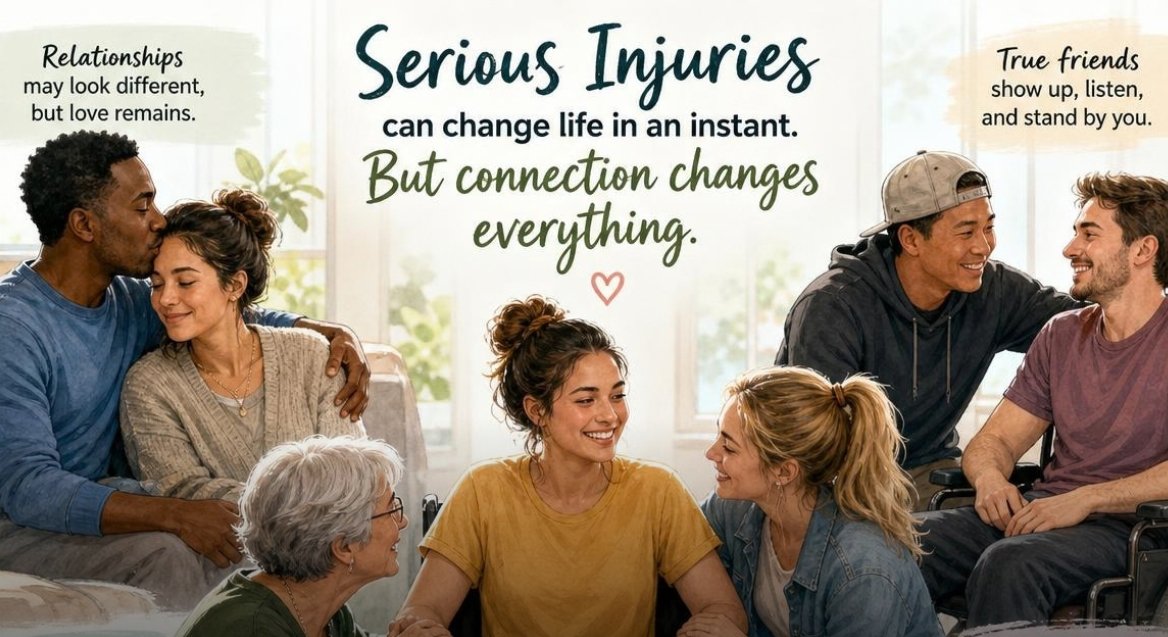
After facing a major personal injury, it’s natural to focus on your physical health. Restoring mobility, managing pain, and doing physical therapy can, in many cases, get your life back on track. Amongst all the physical struggles, however, the social damage caused by a serious injury often takes a back seat in personal priorities. It’s not your fault, but your relationships may suffer significantly as a result of your injury.
Table of Contents
How Do Your Relationships Change?
In the first place, your spouse or next of kin usually becomes your caregiver. That’s a heavy responsibility, and it brings financial and emotional burdens that often lead to resentment or increased tension between you and your closest loved ones.
Many people suffer from increased depression or anxiety after a major injury, particularly if their injuries lead to disfigurement. Burn victims, for example, are a lot less confident in social situations if their burns are on their face, arms or legs. Pain is invisible, so friends and family might not take your management needs as seriously as you need them to.
If you’re in a romantic relationship, your intimacy with your partner may face new barriers. These barriers are layered on top of the physical and emotional strain your partner may receive as your caregiver. Sadly, all of this leads to higher divorce rates for injury victims, especially for those with traumatic brain injuries.
Finally, limited mobility from these injuries may see your social circle shrink in other ways. You can’t take part in activities you used to enjoy, and many of your friends might not know how to support you or adapt to your new reality.
What Injuries Are Most Likely to Affect Your Social Life?
Skin injuries, such as burns, scars and other types of disfigurement, are some of the most common causes of social relationship loss. Injury victims are constantly worried about what people will think of them when they see their scars, especially if they’re on the victim’s face. They start seeing themselves as unworthy of any type of social connection, which leads to isolation and severe depression.
In a similar vein, amputees may worry about their appearance in front of others. They also have to adapt to life with a prosthetic limb, and a majority of amputees will also face phantom limb syndrome. This syndrome is when a person feels pain or irritation where the missing limb should be. Loss of limbs can also affect a person’s ability to work, walk, handle things or simply hold a loved one’s hand.
After suffering a major injury, many people will suffer post-traumatic stress disorder, or PTSD. Symptoms of PTSD may not appear for years after a traumatic incident, but they can make maintaining social relationships difficult. PTSD sufferers face chronic, severe anxiety. They may have constant nightmares or flashbacks about the incident. Their daily life is full of irritability and aggressive behavior, and they may turn violent when they weren’t violent before the injury.
On top of physical damage, people with traumatic brain injuries face cognitive and psychological difficulties, which lead to social isolation as injured people can’t function like they used to. On top of needing a long-term caregiver, TBI survivors have to visit physical therapists, speech therapists, and psychiatrists just to regain a shadow of the people they used to be.
Among all of these injuries, chronic pain is a common companion. Many people don’t handle chronic pain very well, causing them to lash out at friends and loved ones, pushing them away.
How Can Someone Fix Themselves and Their Social Lives?
Many of these social bridges don’t have to be burned forever. First and foremost, don’t try to cope with all of this alone. If you think you have PTSD, increased anxiety or depression, try to get the help of a psychologist or behavioral therapist.
It won’t be an easy fix, and it won’t go away with the proverbial snap of a finger. You’ll need multiple visits over a period of months as you unpack your mental and psychological issues. It can take several failed attempts to find the right coping mechanisms, but most people will find what they need. Your psychologist can help you find the confidence to get back into your social relationships and avoid returning to self-isolation.
As for your closest connections, professional counseling and improved communication can put you on the right track. Encourage your spouse or close relative to speak their mind and share their feelings with you. Alternatively, they can share those feelings with their friends or a therapist if they’re uncomfortable sharing with you. If you can, look for ways to give them a brief respite from caregiving. They deserve a strong social life and a way to de-stress, too.
You may be able to reduce some of your financial problems if someone caused your injury. In that case, a personal injury lawyer may be able to help you. Anyone who caused your injury is financially responsible for your care. Additionally, if you are an attorney looking for the best ways possible to help ensure a win in a complex personal injury case, Advocacy Digital Media can help create well-crafted graphics and animations that can help any jury understand your case the best they can.
As for yourself, take a look around your community for injury support groups. If there aren’t any nearby, there are plenty of online communities with people going through the same things you are. Just knowing you’re not alone can do wonders for your mental health. Developing new interests or starting new hobbies can also help keep your mind busy and connect you with a new social circle.