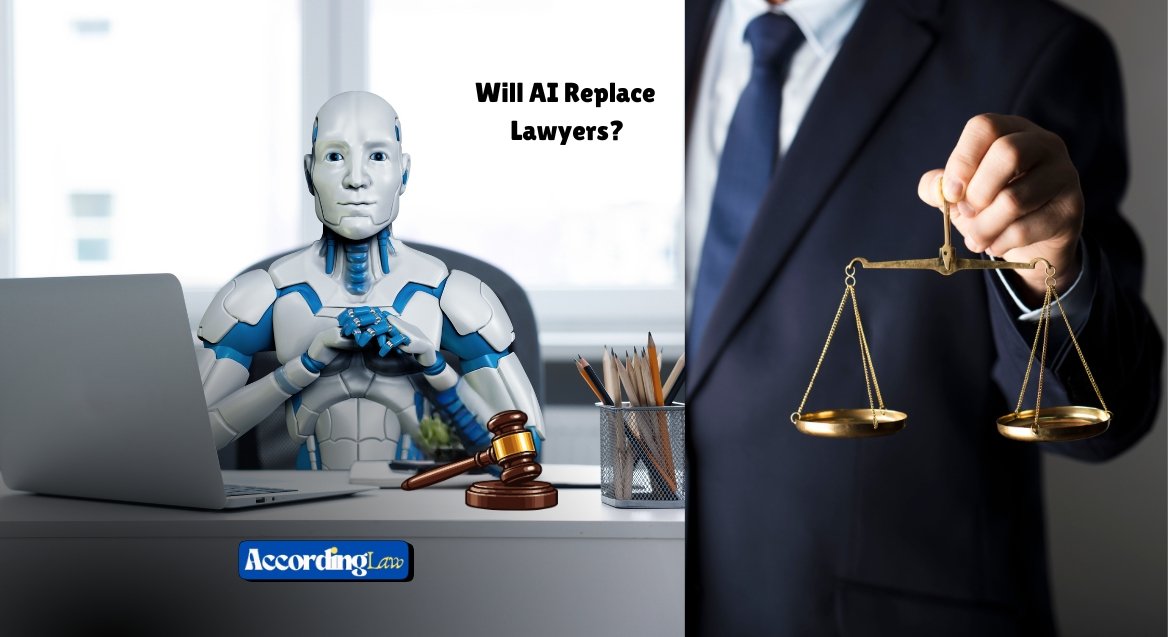
Will AI replace lawyers in the U.S.? Learn what AI can automate, what lawyers still do best, and the future of legal careers.
The short answer is no. It is more complicated than simply answering yes or no. It is more likely that AI will transform legal employment than wholly replace it in the U.S. legal job market.
Surveys and legal ethics guidance show the same pattern:
AI will likely take the repetitive and high-volume work (i.e., research, summarization, drafting work), and lawyers will still be crucial to the work that requires decision making, strategy, ethics, client trust, and accountability. For that reason, legal experts are not pitted against AI; lawyers are seen working alongside AI.
I remember the first time I saw AI transform a chaotic pile of legal something into a summary. It was crazy. It was nuts. As you can tell, a lot of legal students, junior associates, and career switchers are all curious about how AI will affect legal jobs and the answer is that legal work is being transformed, not eradicated. The work is changing as the business card’s title is also changing.
Table of Contents
Why Fear is Justified
This is not baseless. A survey from the 2024 tech report revealed 30.2% of lawyers said their firms utilize AI-based tools. Larger firms reported an even higher number.
According to the 2025 legal industry report, 31% of surveyed respondents said they used generative AI, 21% noted their firms used the same technology, and 39% of firms that were 51 or more attorneys adopted the tools.
Half of surveyed law firms said that exploring and implementing AI technologies was the single most important objective for the next 18 months. What is meant by this is that AI is jumping from a side project to the main focus of legal planning and daily practice.
Getting nervous is understandable when it comes to the potentially monotonous nature of a lot of legal work. A significant number of legal professionals believe AI has the potential to save each legal professional an estimated total of almost $19,000 a year from the time saving, translating to a time saving of almost 240 hours a year for each legal professional.
As a result, it is understandable that there may be some trepidation regarding the potential negative impacts AI may have on job security. The loss of legal work provided from AI is significant, but there is a real possibility that AI could be a significant positive disruptive influence, and a full replacement of legal work is not what is more likely the case.
What AI can Realistically Replace in Legal Work
AI will be utilized to perform low risk, repetitive and structured tasks involved in legal work, which will result in a significant number of legal support tasks changing.
Benefits of AI in Legal Work Include (But are not Limited to) the Following:
1. Assistance in Legal Research
AI has the potential to quickly search large legal databases and quickly surface relevant cases, statutes, or legal summaries.
2. Document Review
AI has the potential to quickly scan legal documents in respect of due diligence, discovery and large case documents.
3. Contract Review
AI has the ability to quickly identify and flag irregular contractual clauses and quickly compare and contrast differing drafts of documents and summarize the identified key clauses.
4. Drafting and Document Review
AI has the capability to draft and review the following legal documents:
5. Legal Administrative Work
AI tools can assist with:
AI can do the legal support work early drafts as it is very good at doing the repetitive boring drafts first. AI also has the potential to do it quickly and do more of it.
AI can spot patterns, but it isn’t required to deal with the ramifications of a wrong decision. That’s the value of retaining a human professional in the field.
What AI Cannot Replace
This is the part that matters most to anyone wondering will lawyers be replaced by AI in the U.S.
Law is not only paperwork, it is judgment under pressure. The answer is weakest when the work depends on nuance.
Lawyers Still Win In:
1. Strategic Judgment
A lawyer must balance:
AI can suggest options. Lawyers choose the right path.
2. Negotiation
Deals, settlements, and disputes often depend on reading people, tone, leverage, and timing.
That is deeply human.
3. Client Trust
Clients usually come to lawyers during stressful moments:
People want calm guidance, not only generated text.
4. Courtroom Advocacy
Persuasion, cross-examination, presence, credibility, and live argument remain human strengths.
5. Ethical Responsibility
AI cannot hold a law license. AI cannot appear in court. AI cannot be disciplined for malpractice.
Lawyers still carry responsibility.
Will AI Take the Place of Lawyers and Judges?
It’s not likely. AI can be helpful in researching for judges, developing drafts, and increasing administrative efficiency, but the judicial system relies on the human element to guarantee the integrity, objectivity, and accountable judgment of decision-makers.
Judges advocating the use of AI stress the necessity of creating environments with restriction guidelines, bias filtration, and data protection. This is a clear indication that judges view AI as a tool to support them, not a replacement for the judicial system.
AI has the capacity to help with the pace of judgment, but it can never hold the judge’s legal and ethical responsibilities for the decision. The system of justice is really about accountability, and that judge is the one who has to sign the order and own it, and be accountable for it. For that reason, AI to replace judges is secondary to the primary necessity of AI.
The Business Model of Law is changing too
Among the changes to be expected in legal practice is how these systems are designing how legal services are to be priced. Reliable reports show that 43% of professionals in the legal area foresee a relative decline in the reliance on the hourly billing approach within the next five years as a result of increased construct efficiency in their practice.
This is important because in the traditional system that had a billing hourly standard the results of legal activity was expected to be a function of time, as in the AI, it is a function of time. The two systems, therefore, were in opposition, and some law firms are likely to adopt the use of AI and sustain the traditional hourly billing system.
Others will likely adopt a system of flat or subscription billing, or a value billing system. The system of legal services is about to undergo a major system transformation.
That’s also why startup counsel, in-house counsels, and solo practitioners have a stronger stake. AI will reduce the cost of general legal work, but it will also democratize legal services to clients who have historically been shut out of the legal market due to price. That’s not to say legal services will be free, effortless, or easier.
Rather, the market may transition away from rewarding legal counsel that is primarily based on pure manual tasks, and instead rewarding work that is focused on judgment, speed, specialization, and communication with the client. Practically speaking, lawyers who are exposed the most in this scenario are not the smartest lawyers. They are often the least strategic, and have practice areas that rely heavily on repetitive manual tasks to sustain their legal practice.
Which Legal Jobs are Most at Risk?
It is important to understand that not every legal role is similarly exposed to risk.
More Exposed Roles:
Safer / Stronger Roles:
Should You Still Become a Lawyer?
Absolutely, but it must be under the new market expectations. Practicing law can be a worthwhile career, but only if you develop sustainable and innovative legal practice skills. Don’t enter law for the same reasons and expectations that other generations of lawyers entered law.
Enter law as a:
More quality focused as you will have to pick your practice areas with more importance and relevance. Areas of law that will rely on human trust, high-stakes negotiation, and counseling, and advocacy in the courtroom will be safer practice areas as opposed to areas of law that will rely on repetitive tasks and work processes. Although the profession will not vanish, the low-value aspects of the profession will.
What Lawyers Should Do Right Now
AI will be a crucial factor for lawyers wanting to secure a stable practice in the future, but only if AI is used as leverage and not as a crutch. This will include knowing the legal tech and also recognizing the limitations that accompany legal tech.
Lawyers should be cognizant of the capabilities and limitations of generative AI, safeguarding of confidential information while retaining competence and professional judgment.
Here is the practical version of that advice in everyday language:
Harness AI for quick drafts, initial searches, initial summaries, and preliminary edits.
Use your AI drafts and summaries for your more nuanced legal opinions. That is where the real value will lie. The lawyers who will win the market will be the ones who combine the thinking and legal judgment of lawyers with the AI’s convenience and speed. The AI will be more valuable than risky to these lawyers.
The Future in 5 to 10 Years
The most probable future is a split in the profession. Some law firms will modernize, automate more workflows, and incorporate more AI. These firms will have faster, cheaper, and more scalable services. The rest of the firms will be in the more traditional law firms. The law firms with the more traditional systems will feel more pressure from more educated clients.
AI focused firms, more than others, have more than a 100% probability of growth due to AI driven services. This means that the traditional firms will not evolve, but rather the more AI focused firms will innovate more and law will be more selective.
Final Verdict
So, will lawyers be replaced by AI?
No. AI will target some of the legal tasks and processes, not entire professions. AI’s introduction will decrease the volume of legal tasks that require less judgment and legal research, and will transform lawyers’ billing models and work from the prescriptive to the strategic. It will also change the structure and content of where legal graduates take their first positions. The elements of the law that require ethics, moral judgment, accountability, persuasion, and a high degree of judgment will always remain the domain of human beings.
Thus far, AI replacing lawyers and judges is a resounding no, especially in the near term. The real question is:
What lawyers will be able to embrace AI to offer more transformative legal services?
Those individuals will be more successful in the coming decade. Not the lawyers who are afraid of AI the most, but those who are able to embrace and use it intelligently.
FAQs
Q. Will lawyers be replaced by AI in the U.S.?
Not fully. AI is already taking over repetitive tasks, but human lawyers are still needed for judgment, strategy, ethics, client counseling, and accountability.
Q. Will AI replace lawyers and judges completely?
Very unlikely. AI can support both professions, but judges and lawyers still need human oversight, ethical control, and responsibility for decisions.
Q. Which legal tasks are most at risk?
Research support, document review, summarization, drafting first versions, and administrative work are the most exposed because they are repetitive and structured.
Q. What should new lawyers do now?
Learn AI tools, understand their limits, and build strengths in strategy, negotiation, ethics, client communication, and specialized practice areas.
Q. Is AI bad for lawyers?
Not necessarily. For many lawyers, AI can increase productivity and reduce low-value workload.